Malawi’s economic recovery has suffered a blow after the World Bank lowered growth forecast from 2.6 percent to 2.3 percent, citing weaker global demand, rising energy costs and tighter financial conditions.
Economists, however, argue that the downgrade reflects weak and misaligned economic planning and recovery, with urgent need for realistic and implementation-focused reforms.
According to the World Bank June 2026 Global Economic Prospects Report, the downgrade places Malawi among a group of emerging and developing economies facing weake-than-expected near term expansion.
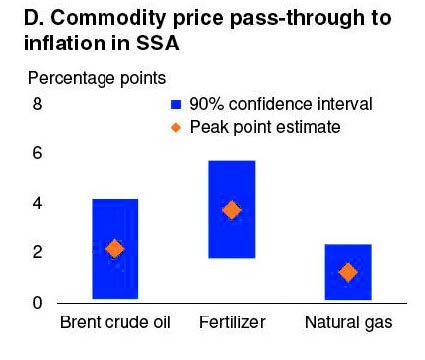
The bank said the outlook for sub-Saharan Africa remains subdued, with disruptions to flows of energy and other commodity supplies adding inflationary pressure in import-dependent economies such as Malawi.
Reads the report in part: “Limited fiscal resources are restricting efforts to manage rising energy and food prices across many sub-Saharan Africa economies, notwithstanding the improved fiscal positions and buffers in recent years.”
The bank has warned that structural reforms and recent trade policy changes will only partly offset global headwinds.
The downgrade highlights Malawi’s vulnerability to external shocks, including higher import costs, inflation and constrained public finances, at a time policymakers are striving to boost investment, create jobs and stabilise the economy.
In April this year, the World Bank warned that Malawi’s macroeconomic instability will remain entrenched due to unsustainable fiscal, monetary and exchange rate policies, resulting in high inflation and declining living standards.
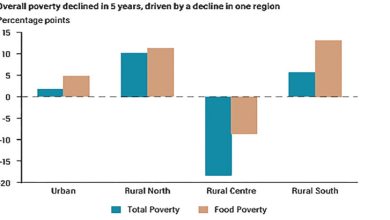
The bank noted that per capita gross domestic product growth has been negative in recent years, resulting in persistently high rates of poverty, with three-quarters of the population living on less than $3 (about K5 300) a day.
In an interview yesterday on the new assessment, Mzuzu University economics lecturer Christopher Mbukwa said the revised outlook signals a weak recovery path with implications for long-term development targets.
He warned that with population growth estimated at 2.5 percent, per capita incomes are falling, increasing the risk of rising poverty levels.
Said Mbukwa: “This shows that we are off-track in as far as achieving Malawi 2063 development plan.
“Secondly, our population growth, which is estimated at 2.5 percent is now higher than the projected economic growth.”
On his part, National Planning Commission director general Frederick Changaya said the downgrade underscores the need for sharper focus in national planning and implementation.
He said Malawi should critically reassess long-standing development priorities, stressing that “the downgrading is telling us to be real and to be serious with our planning”.
Said Changaya: “The down grading is worrying for any well-meaning Malawian and stakeholders.
“It means also that we have to be realistic not with our aspirations but rather with our plans.”
Two weeks ago, Malawi Government hosted a consultative meeting on the five-year National Economic Recovery Plan, with Minister of Finance, Economic Planning and Decentralisation Joseph Mwanamvekha warning that its success hinges on tackling underlying structural challenges.
He cited rising debt, high inflation rate, widening fiscal deficits and dwindling foreign exchange reserves as some of the pressure points.